Here in Central Florida, sunshine is part of our everyday life. Whether you’re heading to the beach, spending the afternoon on the boat, cheering on your kids at weekend sports, or simply running errands, sun exposure is constant.
That’s why Melanoma and Skin Cancer Awareness Month in May is the perfect time to revisit one of the most common topics we discuss with patients every day: sunscreen.
If you’ve ever felt unsure about which sunscreen to choose, or wondered if you’re applying it correctly, you’re among many who have the same questions. Let’s walk through some of the most common questions we hear in our office and our expert answers, so you can protect your skin all year long.
Why Is Sunscreen So Important?
Living in Florida means higher UV exposure year-round. Even on cloudy days or during a quick trip outside, ultraviolet (UV) rays are still reaching your skin.
Over time, UV exposure adds up. It can lead to premature aging, sunspots, and more importantly, skin cancer, which is the most common form of cancer in the United States.
Many people associate sun damage with long days out at the beach, but in reality, it often comes from daily, repeated exposure like driving, walking from your car to a store, or sitting by a window.
In order to fully protect yourself from the sun, you have to start thinking of sunscreen as something to add into your daily routine and not just wait for a day outside to use it.
What Does “Broad-spectrum” Really Mean?
Not all sunscreens are created equally. One of the most important terms to look for is “broad-spectrum,” which means your sunscreen protects against both:
- UVA rays, which penetrate deeply into our skin, contribute to aging and long-term skin damage.
- UVB rays, which damage skin cells, cause DNA mutations, and play a major role in skin cancer.
Especially since Central Florida experiences high UV indexes, you need protection from both UVA and UVB rays every single day.
Does Sunscreen Have An SPF?
Yes! Sunscreen is labeled with an SPF, or sun protection factor, which measures how well it protects your skin from the sun’s rays.
For everyday use, SPF 30 or higher is recommended. For extended outdoor time like beach days, pool days, or playing sports, SPF 50 or higher should be used.
Keep in mind, higher SPF does not mean you can skip reapplication. No sunscreen blocks 100% of UV rays, so you’ll need to reapply every two hours, no matter what SPF you use.
How Much Sunscreen Should I Apply?
This is where most people fall short.
As a general guide:
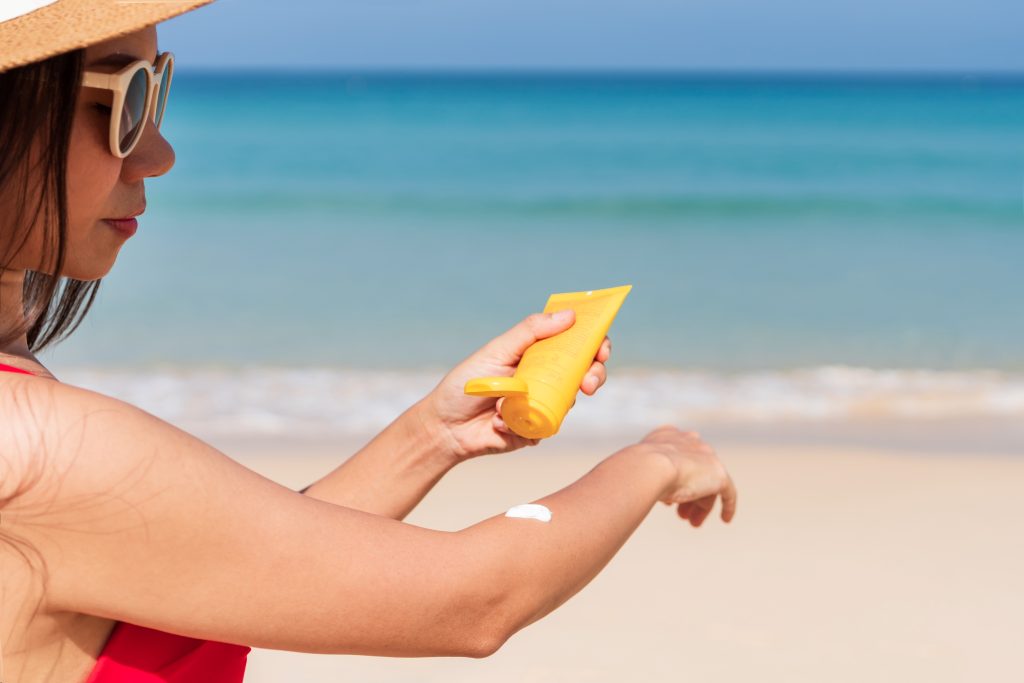
- Use about a shot glass amount (1 ounce) for your entire body
- Use about a nickel-sized amount for your face
And don’t forget these commonly missed areas:
- Ears
- Neck
- Scalp (especially along parts)
- Tops of the feet (easy to miss in sandals or at the beach)
- Hands (especially while driving)
How Often Should I Reapply My Sunscreen?
With the Florida heat, humidity, and our exposure to water, reapplication is essential.
You should:
- Apply sunscreen 15-30 minutes before going outside
- Reapply every 2 hours
- Reapply after swimming, sweating, or towel drying
Even “water-resistant” sunscreen wears off, especially during time in the water, or long afternoons outdoors.
How Can I Make Sure I Am Getting Adequate Sun Protection During Physical Activity?
In our climate, sweating is unavoidable. The key is choosing the right sunscreen and being consistent with reapplication.
Look for a water-resistant, broad-spectrum sunscreen (SPF 30 or higher), which is designed to stay effective for 40 to 80 minutes, even when you’re sweating. Apply it 15-30 minutes before heading outside to allow it to fully absorb.
If you’re active outdoors, plan to reapply at least every 2 hours, and more often if you’re sweating heavily or towel drying. Stick formulas or sport sunscreens can make reapplication easier on the go.
You can also increase your sun protection by wearing lightweight, moisture-wicking clothing, hats, and sunglasses, and by taking breaks in the shade when possible.
Do I Really Need Sunscreen Every Day?
Yes! We cannot stress this enough!
UV exposure happens during:
- Your morning commute in the car
- Your trip in an airplane
- On cloudy or rainy days
- Getting your nails done with UV lamps
- Walking into work or the grocery store
- Sitting near windows at home or in the office
UVA rays can pass through glass, meaning your skin is still exposed even when you’re indoors.
Daily sunscreen use helps prevent the gradual buildup of damage that we often don’t notice until years later.
What’s The Proper Way To Store Sunscreen?
Proper storage helps ensure your sunscreen remains effective.
When you’re outdoors (like at the beach or pool):
- Keep sunscreen out of direct sunlight when possible
- Store it in a cooler, beach bag, or under a towel
- Avoid leaving it in hot cars, where high temperatures can break down the ingredients
When not in use:
- Store sunscreen in a cool, dry place
- Check the expiration date, and replace it if it’s expired or has changed in texture or smell
Heat and sun exposure can reduce how well sunscreen works, so storage matters more than many people realize.
What Can I Use To Protect My Eyes?
Your eyes and the delicate skin around them are especially vulnerable to sun damage.
We recommend:
- UV-blocking sunglasses that protect against 100% of UVA and UVB rays
- Wide-brim hats for added shade
- Sunscreen formulated for the face or around the eyes (look for gentle, non-irritating formulas)
Protecting your eyes helps reduce your risk of long-term damage and skin cancer around the eyes and eyelids.
Is Sunscreen Really Enough To Protect My Skin?
Sunscreen is vital, but it works best as part of a bigger strategy.
We recommend layering your protection, especially during Florida’s peak sun hours:
- Seek shade when possible, especially between 10 a.m. and 4 p.m.
- Wear protective clothing, hats, and sunglasses
- Say no to intentional tanning, especially tanning beds
Do I Still Need Sunscreen If I Don’t Burn Easily?
We often hear this question from patients who tan easily. However, we have to remember that a tan is actually a sign of skin damage, not protection. So, yes, you still need sunscreen, even if you tan easily.
Even without visible sunburn, UV exposure can still lead to skin cancer and premature aging over time.
No matter your skin type, sunscreen is a must.
What’s the Difference Between Mineral and Chemical Sunscreen?
Both types are effective, and the best sunscreen is the one you’ll use consistently.
- Mineral sunscreens are great for sensitive skin as they sit on top of the skin instead of being absorbed into the skin. They work by reflecting UV rays, forming a “shield” on the skin.
- Chemical sunscreens use carbon-based compounds to absorb a thin protective layer into the skin to protect from UV rays. They often feel lighter on the skin.
For many of our patients, it comes down to preference, especially for daily wear in heat and humidity.
FLDSCC Is Here For Your Skin Care and Sunscreen Needs
One of the appeals to living in Florida is enjoying the outdoors. But with our fun outdoors, we must also be proactive about sun protection.
If there’s one thing we want you to remember this Melanoma and Skin Cancer Awareness Month, it’s this: Sun protection isn’t just for beach days, it should be an everyday habit.
If you ever have questions about your sunscreen application, or notice anything new or changing regarding your skin, we’re here for you.
About Us
FLDSCC’s team of providers are experts in diagnosing and treating skin cancers; skin conditions and diseases such as eczema, rosacea, dry skin, rashes, and warts; and chronic skin diseases and infections, while simultaneously tackling aging skin, wound care, and a multitude of other skin, hair, and nail concerns.
Several FLDSCC providers are fellowship-trained in Mohs micrographic surgery, an effective state-of-the-art treatment for most types of skin cancers. Mohs surgery involves minimal discomfort and encourages the greatest preservation of healthy tissue, which means less risk of scarring and superior cosmetic results.
FLDSCC has many convenient locations throughout the state. For more information, visit www.fldscc.com, or call (855) FLD-SKIN.