As dermatologists, one of the most surprising things we hear from our patients is that they don’t think they need sunscreen during the winter. We get it – winter can be cold (even in Florida), the sun doesn’t feel as strong, and many of us associate sun protection with warm weather, beaches, and summer fun. But here’s the reality: sun protection isn’t seasonal, it’s year-round.
While our temperatures may be cooler and the days slightly shorter, ultraviolet (UV) radiation remains constant. Sunshine during the winter months can still damage your skin, contribute to aging, and increase your risk of skin cancer. Let’s break down why that’s true, and how you can make smart sun-safe choices even when the temperature drops.
Sunlight in Winter Isn’t Harmless
One of the biggest misconceptions about sun exposure is that it has to be hot to equal danger for your skin. In reality, UV radiation is not tied to temperature. Even when the air feels comfortable or cool, UV rays are still reaching your skin. UV rays don’t turn off when it’s winter. In fact, they’re present every day of the year. According to the American Academy of Dermatology, 80% of UV rays can penetrate clouds on overcast days. That means even gloomy winter skies can still deliver a significant dose of UV exposure to unprotected skin.
There are two types of UV rays that matter for skin health:
- UVA rays penetrate deeply and are present with relatively equal intensity year-round. They contribute to premature skin aging and can also play a role in skin cancer.
- UVB rays are the main cause of sunburn and change with the seasons, but they’re still present during winter and can cause damage to your skin.
Because these rays are present even in cold weather, relying on cloudy skies as a shield is a myth; one that can put your skin at risk.
Cumulative Sun Damage Happens Year-Round
From a dermatologic standpoint, one of the most important concepts we discuss with patients is cumulative sun damage. UV exposure adds up over time, whether it happens during a summer beach day or a chilly winter afternoon.
Repeated, unprotected exposure contributes to:
- Skin cancers, including basal cell carcinoma, squamous cell carcinoma, and melanoma
- Premature aging such as fine lines, wrinkles, and loss of skin elasticity
- Sunspots and uneven skin tone
- Breakdown of the skin’s protective barrier
Many skin cancers we diagnose at Florida Dermatology and Skin Cancer Centers develop on areas that receive sun exposure daily. These areas include the face, ears, neck, scalp, forearms, and hands.
It’s also important to remember that a history of sunburns, even those that occurred years ago, increases the lifetime risk of melanoma. Winter sunburns may be less common, but they do occur, especially during long days outdoors without sunscreen.
Why Winter Feels “Safer” But Isn’t
Florida winters can be deceptively comfortable. With lower humidity and cooler temperatures, people often:
- Skip sunscreen because they don’t feel hot
- Spend more time outdoors than they do in summer
- Wear less protective clothing than they would during peak summer heat
This combination can actually increase UV exposure during winter months. The absence of discomfort doesn’t mean the absence of damage. Cumulative UV radiation hits quietly, often without immediate visible signs.
Winter Travel Tips
While Florida itself doesn’t have snow or high-altitude environments, many residents travel during the winter. Trips to the mountains, ski destinations, or even cooler northern climates can significantly change your sun exposure risk.
In snowy environments, UV rays are reflected off snow, intensifying exposure to the face and eyes. At higher altitudes, the thinner atmosphere filters less UV radiation, and increases risk of sun damage. These factors make sunscreen, protective eyewear, and lip protection especially important when traveling, even if temperatures are well below what we might associate with sunburn.
If you’re planning winter travel, consider sun protection just as essential as packing warm clothing.
Practical Winter Sun Protection Tips for Floridians
Protecting your skin during Florida’s winter doesn’t require some complicated routine, but it does require consistency.
1. Use Sunscreen Every Day
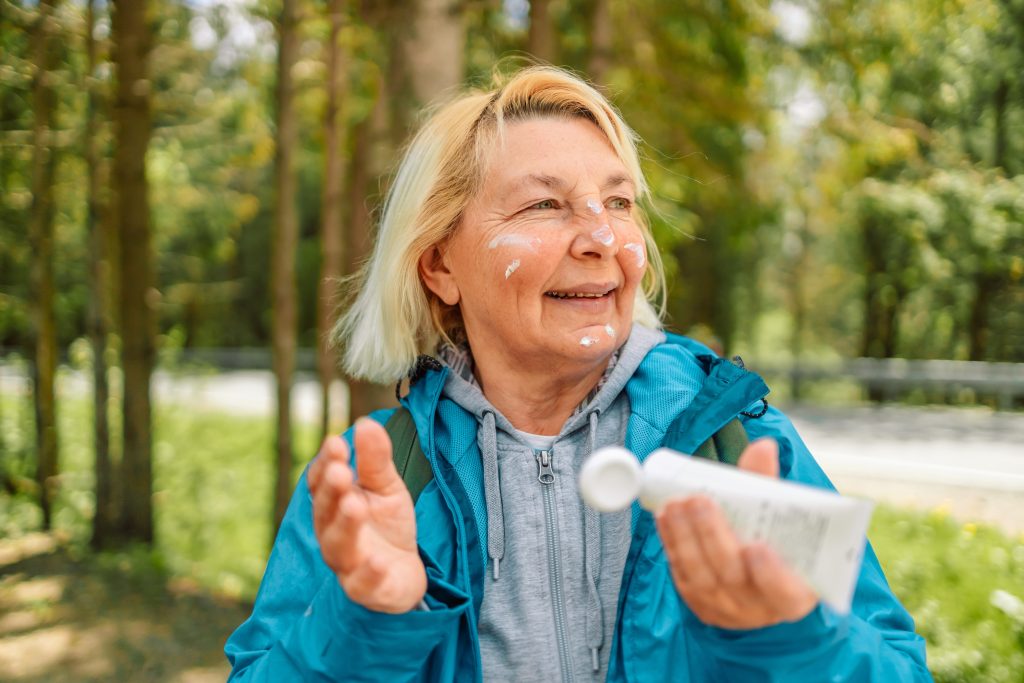
Daily sunscreen use should be as routine as brushing your teeth. Choose a broad-spectrum sunscreen with SPF 30 or higher and apply it to all exposed skin, including:
- Face
- Neck
- Ears
- Scalp (especially along the part or if hair is thinning)
- Hands and forearms
Apply sunscreen 15–30 minutes before going outside and reapply every two hours if you’re spending time outdoors. If you’re sweating or swimming, use a water-resistant formula.
2. Don’t Forget Your Lips and Eyes
The lips and the skin around the eyes are thinner and more vulnerable to UV damage. Use lip balm with an SPF, and wear sunglasses that block 100% of UVA and UVB rays. This protects not only your eyes but also the delicate skin where skin cancers commonly develop.
3. Use Clothing as a First Line of Defense
Lightweight long sleeves, wide-brimmed hats, and UPF-rated clothing can significantly reduce UV exposure. Even in Florida’s mild winters, protective clothing is effective, especially during activities like gardening, fishing, or attending outdoor events.
4. Support Your Skin Barrier
Winter air, even in Florida, can be drier. When the skin barrier is compromised, it becomes more susceptible to irritation and environmental damage, including UV exposure.
Support your skin by:
- Using a gentle cleanser
- Applying a hydrating moisturizer with ceramides or hyaluronic acid
- Avoiding overly hot showers that strip natural oils
Remember, healthy, well-hydrated skin is better equipped to tolerate environmental stress.
Sun Protection is A Florida Lifestyle
In Florida, sun exposure is part of everyday life, not just a summer concern. Winter may bring cooler temperatures and lower humidity, but UV radiation remains constant, and its effects accumulate over time.
We encourage you to make sun protection a daily habit, regardless of the season. Sunscreen, protective clothing, and UV-blocking eyewear can help you maintain healthy, resilient skin. As experts in dermatology, our goal is to help you enjoy Florida’s beautiful weather safely, all year long.
About Us
FLDSCC’s team of providers are experts in diagnosing and treating skin cancers; skin conditions and diseases such as eczema, rosacea, dry skin, rashes, and warts; and chronic skin diseases and infections, while simultaneously tackling aging skin, wound care, and a multitude of other skin, hair, and nail concerns.
Several FLDSCC providers are fellowship-trained in Mohs micrographic surgery, an effective state-of-the-art treatment for most types of skin cancers. Mohs surgery involves minimal discomfort and encourages the greatest preservation of healthy tissue, which means less risk of scarring and superior cosmetic results.
FLDSCC has many convenient locations throughout the state. For more information, visit www.fldscc.com, or call (855) FLD-SKIN.