January is Thyroid Awareness Month, and it’s a perfect time to stop and consider how your skin, hair, and nails might be silently signaling something deeper. While the thyroid gland sits in the middle of the lower part of your neck, its influence reaches much farther, affecting many aspects of our health. According to the American Thyroid Association, more than 12 percent of the U.S. population will develop a thyroid condition in their lifetime. Currently, about 20 million Americans have some form of thyroid disease and up to 60 percent of those with the disease aren’t aware they have it.*
Changes in the skin, hair, and nails are often among the earliest visible clues that something may be wrong with thyroid function. As dermatologists, we’re uniquely positioned to help you recognize these signs and understand when further evaluation may be needed.
Why Thyroid Function Matters for Your Skin, Hair & Nails
The thyroid gland produces hormones that regulate metabolism, temperature, and cellular turnover. It also helps with skin renewal, hair growth, and nail formation. When thyroid hormone levels are too low (hypothyroidism) or too high (hyperthyroidism), the disruption can lead to noticeable and sometimes bothersome changes in your appearance.
Not every symptom equals thyroid disorder. Many skin, hair, or nail issues can also occur from aging, stress, or other health conditions. But when these changes occur alongside other symptoms like fatigue, weight shifts, mood changes, or unusual temperature sensitivity, it’s worth discussing with your doctor.
Common Skin Changes with Thyroid Dysfunction
In Hypothyroidism (Underactive Thyroid)
When the thyroid produces too little hormone, the skin often becomes dry, rough, and flaky. This happens because low hormone levels slow down metabolism and reduce activity in oil and sweat glands, which normally help maintain moisture and skin barrier health. Many patients describe their skin feeling tight or leathery, especially on the arms and legs.
You might also notice your skin becoming pale or cool to the touch, due to slower circulation. In addition, slow thyroid function can make your skin look slightly yellow or rust-colored due to an accumulation of carotene buildup. Rarely, more dramatic changes like thickened, waxy skin can appear, particularly in longstanding or severe hypothyroidism.
Wounds may heal more slowly when thyroid function is significantly impaired. While this can be frustrating, it’s a valuable clue that a systemic condition such as hypothyroidism might be influencing your skin.
In Hyperthyroidism (Overactive Thyroid)
When the thyroid overproduces hormones, it’s called hyperthyroidism. This speeds up functions in the body and an increased metabolism can make your skin feel warm, smooth, and sometimes slightly moist or sweaty. The skin may become thinner and more delicate, making it more prone to bruising or tearing.
Excessive redness or flushing, especially in the face and palms, may also be present. Some patients experience itching, chronic urticaria (hives), or other types of inflammatory reactions.
Common Hair Changes with Thyroid Dysfunction
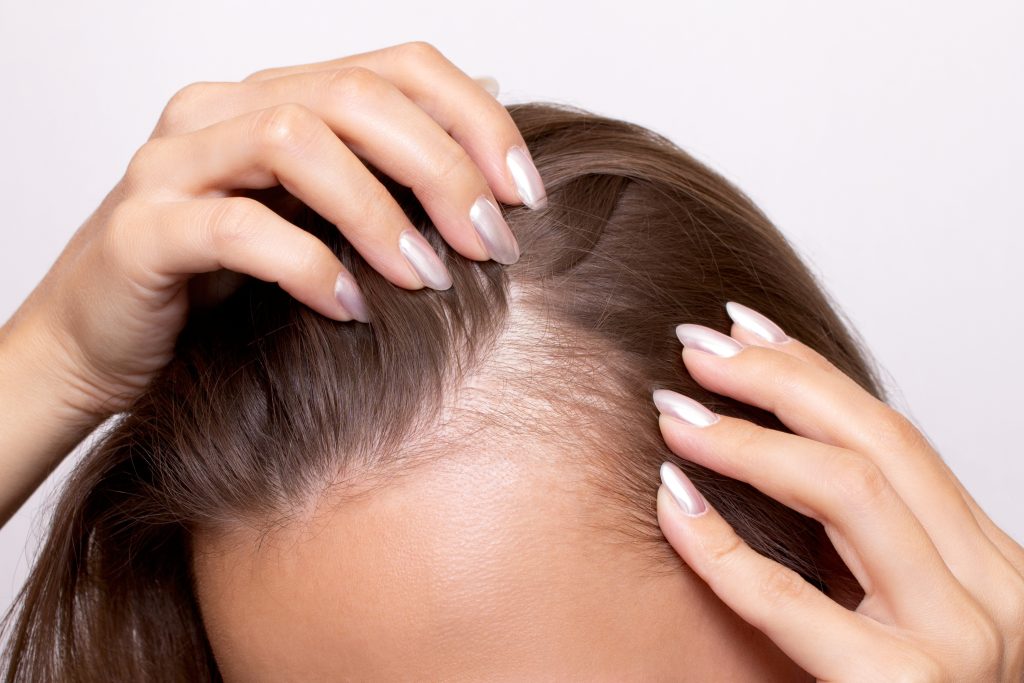
Both hypo- and hyperthyroidism can affect hair, though the patterns differ. In hypothyroidism, hair often becomes dry, coarse, and brittle, and may grow more slowly. Extended hair thinning across the scalp and body, including the eyebrows, can also occur.
Hyperthyroidism may also lead to hair thinning, but the hair tends to be finer and softer, and sometimes falls out more easily due to an increased metabolic turnover. Some patients describe a general reduction in their volume or increased shedding during brushing or showering.
In both conditions, these changes are typically linked to how thyroid hormones influence the hair growth cycle, including shifting hair follicles into the resting (telogen) phase more quickly.
Common Nail Changes with Thyroid Dysfunction
Your nails, like your skin and hair, require well-regulated metabolism for normal growth and strength. In hypothyroidism, nails often grow more slowly and may become thick, brittle, and ridged. They can also peel and break easily.
With hyperthyroidism, nails can become soft, shiny, and sometimes develop a loosening of the nail plate from the nail bed, which is called onycholysis. In certain cases, nails may even take on a concave or inward curved shape.
These kinds of changes are often subtle at first but can become more pronounced over time. Because nails grow slowly, they can also serve as a historical record of thyroid imbalance, as ridges and changes are reflected in real time.
Diagnosing Thyroid-Related Skin, Hair & Nail Changes
If you notice combinations of the symptoms listed above, especially when paired with fatigue, weight changes, temperature sensitivity, mood fluctuations, or irregular heart rate, it’s wise to bring them up with your primary care physician, endocrinologist, or dermatologist.
Typical steps in evaluation include:
- Medical history & physical exam: We’ll ask about the onset and pattern of your symptoms.
- Blood tests: Measuring levels of thyroid-stimulating hormone (TSH), free T4, and sometimes free T3 helps determine if your thyroid is underactive, overactive, or functioning normally.
- Skin, nails & hair assessment: A dermatologist will evaluate your hair, skin, and nails to help rule out other causes of similar symptoms and focus care where it’s needed most.
Because many symptoms overlap with other conditions, the right diagnosis requires analysis between all three types of evaluation. Your dermatologist is a great resource in getting you started and helping you determine any next steps.
Dermatological Treatment Options
Treating the underlying thyroid condition, often with the help of a primary care provider or endocrinologist, is an essential first step. However, while thyroid levels are being evaluated and stabilized, a dermatologist can play an important role in helping improve the appearance and structure of your skin, hair, and nails. Our goal is to relieve symptoms, support healing, and improve quality of life during this process.
How Dermatology Can Help
Moisturization & Skin Barrier Repair
Thyroid-related skin dryness can be more severe than typical dry skin. Dermatologists often recommend rich, fragrance-free moisturizers that contain ingredients like ceramides, hyaluronic acid, or urea to help repair the skin barrier and lock in moisture. Using gentle cleansers and avoiding harsh soaps can also reduce irritation, itching, and flaking.
Prescription Treatments for Rashes & Itching
If thyroid disease is contributing to ongoing redness, rashes, or itchiness, especially in autoimmune thyroid conditions, prescription topical medications may be used. These treatments help calm inflammation, reduce discomfort, and allow the skin to heal. Your dermatologist will choose options that are safe for long-term use and appropriate for your skin type.
Hair Thinning & Scalp Support
Hair changes related to thyroid imbalance can be distressing, but they are often temporary. Dermatologic care may include guidance on gentle hair care routines, medical-grade shampoos, and scalp treatments to support healthier hair growth. In cases of noticeable thinning, topical treatments may be recommended to help stimulate regrowth while thyroid levels balance out.
Nail Strengthening & Protection
Brittle, peeling, or slow-growing nails are common with thyroid dysfunction. Your dermatologist can recommend strengthening treatments, protective nail care strategies, and topical products to reduce splitting and breakage. Simple changes like keeping nails short, wearing gloves for household chores, and avoiding frequent exposure to water or harsh chemicals can also make a difference.
What to Expect Over Time
As thyroid hormone levels return to a healthy range, many skin, hair, and nail changes gradually improve. It’s normal for improvement to take several weeks to a few months, and supportive dermatologic care can help you stay comfortable during that transition.
Outlook & Next Steps
Noticing changes in your skin, hair, or nails can be frustrating, but these signs often provide valuable clues about your overall health. Thyroid-related changes tend to develop slowly and, in many cases, are reversible when identified early and treated appropriately.
During Thyroid Awareness Month, it’s a good time to pause and pay attention to what your skin may be telling you. Because dermatologists are trained to recognize patterns that may point to internal conditions, a skin check can be an important step toward understanding the bigger picture.
If you’ve noticed ongoing changes in your skin, hair, or nails, especially when paired with symptoms like fatigue, unexplained weight changes, or sensitivity to heat or cold, we encourage you to schedule an appointment. Our dermatology team can help determine whether these changes are related to thyroid dysfunction or another skin condition and guide you toward appropriate next steps. Early evaluation can lead to clearer answers, more effective treatment, and better long-term skin health. Contact Florida Dermatology and Skin Cancer Centers today to schedule an appointment at one of our convenient locations.
* 2026 facts and figures derived from the American Thyroid Association (ATA).
About Us
FLDSCC’s team of providers are experts in diagnosing and treating skin cancers; skin conditions and diseases such as eczema, rosacea, dry skin, rashes, and warts; and chronic skin diseases and infections, while simultaneously tackling aging skin, wound care, and a multitude of other skin, hair, and nail concerns.
Several FLDSCC providers are fellowship-trained in Mohs micrographic surgery, an effective state-of-the-art treatment for most types of skin cancers. Mohs surgery involves minimal discomfort and encourages the greatest preservation of healthy tissue, which means less risk of scarring and superior cosmetic results.
FLDSCC has many convenient locations throughout the state. For more information, visit www.fldscc.com, or call (855) FLD-SKIN.