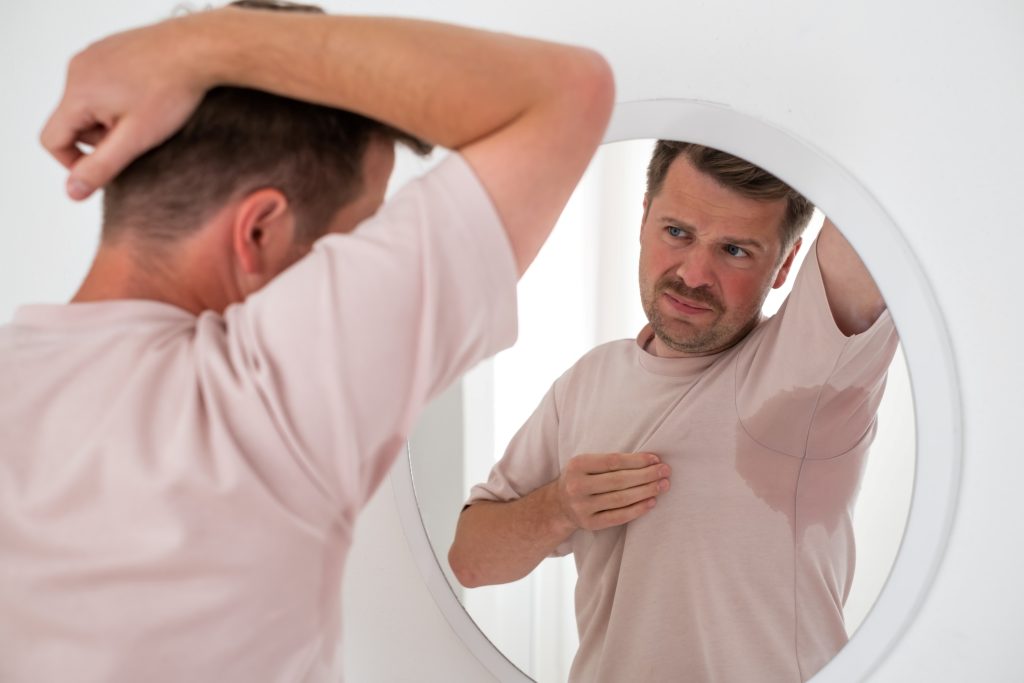
Sweating is your body’s natural way of cooling down, but for some people, it’s much more than that. If you find yourself sweating through clothes on mild days or worrying about sweat stains before big moments, you may be dealing with a disorder called hyperhidrosis, or excessive sweating.
At Florida Dermatology and Skin Cancer Centers (FLDSCC), we see patients who feel frustrated or uncomfortable by how much they sweat. The good news? There are real, effective treatments that can help. Let’s break down what causes excessive sweating, what you can try at home, and how a dermatologist like FLDSCC can help you find relief.
Why Does Excessive Sweating Happen?
Sweating is controlled by your body’s nervous system; it’s how your brain tells your sweat glands to turn on when you’re hot or stressed. But sometimes, those signals go into overdrive.
There are two main types of excessive sweating:
- Primary (focal) hyperhidrosis – This type isn’t caused by an underlying medical issue. It usually starts in childhood or adolescence and affects specific areas like the underarms, hands, feet, or face.
- Secondary (generalized) hyperhidrosis – This type happens as a result of another condition or medication, such as thyroid disease, diabetes, infections, menopause, or certain antidepressants.
In primary hyperhidrosis, sweat glands are healthy but the nerves that control them are overly active. It’s a nervous system issue, not a hygiene problem. And while it can run in families, lifestyle and triggers play a big role too.
When it comes to secondary hyperhidrosis, sweating is typically more widespread and may occur all over the body rather than just in certain areas. It can be linked to hormonal changes, metabolic disorders, or medication side effects. For example, people experiencing menopause often notice night sweats, while others may develop excessive sweating due to overactive thyroid function or certain prescription drugs. In these cases, treating the root cause is absolutely necessary.
Common Triggers That Can Make Sweating Worse
Even if you have a natural tendency to sweat more, certain things can make the problem worse. Common triggers include:
- Heat and humidity – Warm weather and poorly ventilated rooms can set off sweat glands quickly.
- Stress and anxiety – Emotional triggers can prompt sweating, especially on the palms, face, and underarms.
- Spicy foods and caffeine – These can raise your heart rate and stimulate nerves that control sweat.
- Tight or synthetic clothing – Fabrics that trap heat and moisture make sweating worse.
- Alcohol – Increases blood flow and raises body temperature.
By tracking your symptoms and getting to know what triggers your sweating, you can help bridge the gap and manage your symptoms more effectively.
Why Excessive Sweating Can Be Hard to Live With
For most people, sweating is an occasional inconvenience. But for those with hyperhidrosis, it can affect nearly every part of life.
Many of our patients describe having:
- Anxiety – Avoiding handshakes or social situations out of fear of visible sweat stains.
- Discomfort – Constant dampness, which leads to skin irritation, chafing, or odor.
- Wardrobe stress – Having to plan outfits carefully or change clothes multiple times a day.
- Low confidence – Feeling self-conscious at work, school, or in relationships.
At Florida Dermatology and Skin Cancer Centers, we sympathize with each of these issues and acknowledge wholeheartedly that hyperhidrosis deserves compassion and real treatment.
At-Home Steps to Help Manage Sweating
If your sweating is mild or intermittent, a few at-home strategies can make a difference:
1. Upgrade Your Antiperspirant
Look for antiperspirants, which are stronger than deodorants, and designed to reduce sweat output. Apply these at night when sweat glands are less active for best results.
2. Choose Breathable Fabrics
Lightweight, moisture-wicking materials like cotton and bamboo help your skin stay cooler and drier.
3. Watch Your Diet and Stress Levels
Limit caffeine, spicy foods, and alcohol if they make sweating worse. Mind-body practices such as yoga or deep breathing can also calm the nerves that trigger sweat.
4. Keep Skin Dry
Change socks and clothing when wet and consider using absorbent powders or moisture barriers to help keep moisture at bay. Be sure to keep your skin clean by wiping down or showering after exercising or sweating to prevent irritation or infections.
If you’ve tried all of these at-home options and nothing seems to help, it may be time to see a dermatologist.
When to See a Dermatologist
It’s worth looking into seeing a board-certified dermatologist if:
- You sweat even when you’re not hot or active
- Your sweating interferes with your work, social, or personal life
- You’ve tried antiperspirants and still sweat profusely
- Sweating occurs mostly at night
- You experience skin irritation, rashes, or infections due to excess moisture
Early evaluation from a professional can help rule out underlying causes and help you get the right treatment.
How a Dermatologist Can Help
AT FLDSCC, our dermatologists specialize in both the skin and the sweat glands beneath it. When you visit one of our office locations, we’ll review your medical history, identify possible triggers, and determine whether your sweating is primary or secondary hyperhidrosis.
There are a number of treatment options available, including:
- Prescription-strength antiperspirants
- Medicated wipes that calm overstimulated nerves
- Botox injections
- Oral medications
- Electrical or energy-based treatment recommendations
Depending on your lifestyle, sweating patterns, and desired outcomes, we can tailor a treatment plan that’s right for you.
We Can Help You Take Back Control
Excessive sweating can feel isolating, but you’re not alone and effective treatments do exist. With the right approach, many patients are able to see a major improvement in their comfort, confidence, and quality of life.
If you’re ready to stop planning your day around your sweating, ask our dermatology team about one of our personalized anti-sweating solutions today.
About Us
FLDSCC’s team of providers are experts in diagnosing and treating skin cancers; skin conditions and diseases such as eczema, rosacea, dry skin, rashes, and warts; and chronic skin diseases and infections, while simultaneously tackling aging skin, wound care, and a multitude of other skin, hair, and nail concerns.
Several FLDSCC providers are fellowship-trained in Mohs micrographic surgery, an effective state-of-the-art treatment for most types of skin cancers. Mohs surgery involves minimal discomfort and encourages the greatest preservation of healthy tissue, which means less risk of scarring and superior cosmetic results.
FLDSCC has many convenient locations throughout the state. For more information, visit www.fldscc.com, or call (855) FLD-SKIN.