After all the school supplies are purchased and the backpacks are loaded for the first day of school, sun protection is probably the last thing on your mind. Summer is winding down and it’s easy to assume sunscreen season is over too. But this simply isn’t the case.
At Florida Dermatology and Skin Cancer Centers, we see the effects of sun exposure every day with our patients. We see skin injury from the sun built up over years not just from summer vacations, but from the ordinary, everyday moments parents might not think to protect against: recess, the walk to the bus stop, soccer practice, even the drive to school. Skin damage accumulates quietly, school day after school day, all year long.
That’s the message we want every family in our practice to take into this school year: sun protection isn’t a summer activity. It’s a habit, and like any good habit, it’s easiest to build when kids are young and it’s woven into things they’re already doing like brushing their teeth, tying their shoes, and getting buckled into the car.
The School Year Still Counts
A lot of parents are surprised to learn that some of the highest UV exposure doesn’t happen at the pool. It happens during ordinary parts of the school day:
- Recess and playground time. Many elementary schools schedule outdoor recess in the late morning or early afternoon, right when UV rays are at their strongest.
- Sports practices and games. Sports like soccer, football, baseball, and cross country often mean an hour or more outside during peak sun hours, several days a week.
- Waiting for the bus. A few minutes a day doesn’t sound like much, but multiplied across a 180-day school year, it adds up to a lot of exposure.
- Car rides. Windshields filter out most UV rays, but side and rear windows let a significant amount of UVA rays through, which are the type most linked to long-term skin aging and skin cancer risk. Whether it’s an arm resting on the door or the side of the face, these get more sun than we realize, especially on long carpool routes or sports-team road trips.
As you can see, none of this UV damage requires a beach trip. It just requires daylight, which is part of every school day.
Building a Sunscreen Routine
We know mornings in a house with kids can be busy and a bit chaotic. We don’t have time for a ten-step skin care routine before the bus comes. But the goal isn’t perfection, it’s making sun protection automatic enough that it happens even when you are in a rush.
A few things that actually work for the families across our offices:
- Put sunscreen next to the toothbrush. If sunscreen is in the same spot as something kids already do without being asked, it makes putting it on much easier.
- Let kids choose their formula. Whether it’s a stick or a lotion that doesn’t feel greasy, letting a child choose their own preference can greatly impact their decision to wear it. A sunscreen a child will actually use beats one that ends up in the bottom of a backpack.
- Keep a backup in the backpack or locker. A travel-size stick or compact bottle of sunscreen can be effective when kids need to reapply before recess, gym outside, or sports. Be sure to check your school’s policy first.
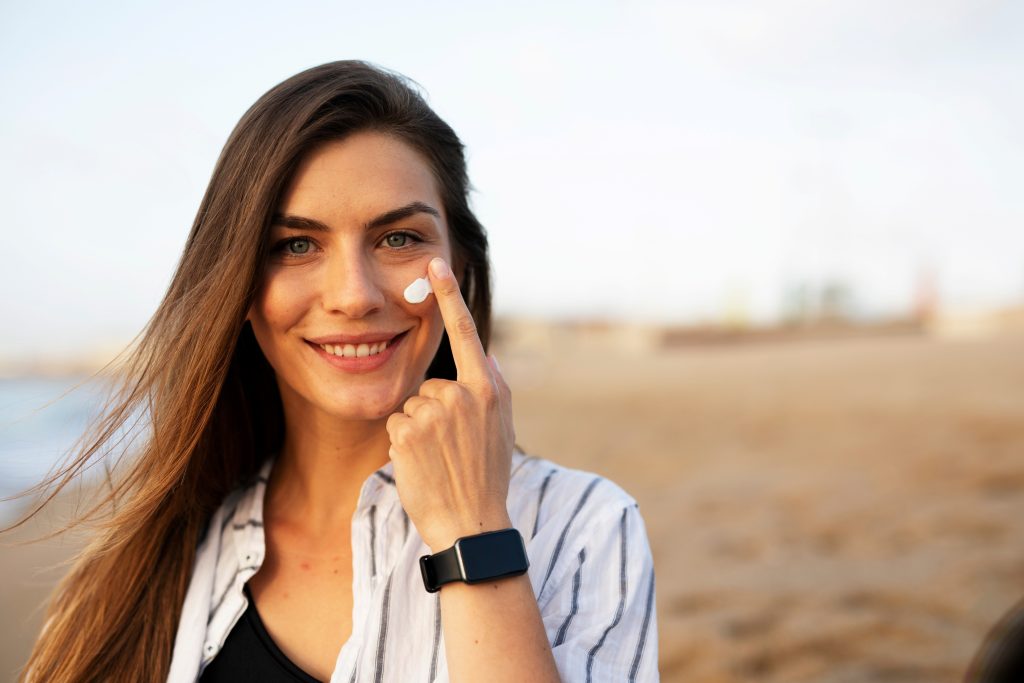
- Use SPF 30 or higher, broad-spectrum, water-resistant sunscreen. Apply this about 15 minutes before heading out the door so it has time to bind to the skin.
- Set a reapplication reminder. Help your child remember to reapply at specific times throughout their day like before practice or after lunch each day.
Don’t Forget the Non-Sunscreen Tools
Sunscreen is one layer as part of an entire sun safety plan. We talk to families about stacking their sun protection all the time. Here’s what that looks like:
- Wear hats with a wide brim when at all possible outdoors.
- Wear UPF-rated clothing for sports practices and other extended periods of time outside.
- Pack sunglasses with UV protection for bus stops, recess, and car rides to protect from UV eye damage.
- Encourage shade-seeking. Teach kids to notice where the shaded side of the playground is, the same way they’d notice where the water fountain is.
- UV window film or tint for the family car, especially if a child spends a lot of time in the back seat on long drives to games or school.
Family Self-Exams
One of the most overlooked parts of back-to-school season is also one of the most important: this is a great, low-pressure time to start a regular family skin check.
A simple approach that works well for most households:
- Pick a specific time, like the first weekend of every month, or right after a haircut.
- Check your kids in good light and look for the basics: any mole that’s changed in size, shape, or color; anything new that wasn’t there before; anything that itches, bleeds, or won’t heal.
- Don’t skip the easy-to-miss spots – scalp, ears, back, backs of legs, and the soles of feet.
- Bring questions to your child’s next pediatric visit or your own dermatology appointment rather than waiting for something to seem urgent.
The goal is to make checking in on our skin feel normal as something families just do together as a habit.
Children Are Natural Imitators
Kids are far more likely to wear sunscreen, a hat, or sunglasses if they see the adults around them doing the same thing without complaint. If you’re standing on the sideline at practice unprotected while telling your child to reapply their sunscreen, you might be sending them a message that says it’s not that important.
The reverse is also true. Parents who treat sun protection as a normal part of their routine are more likely to raise kids who do the same, often well into adulthood. Sun protection should be a habit that follows your child through their teens, their twenties, and beyond.
A Simple Back-to-School Checklist
- Broad-spectrum SPF 30+ sunscreen by the bathroom sink
- Travel-size sunscreen in the backpack or locker (check your school’s policy)
- A hat and sunglasses kids will actually want to wear
- UPF clothing for sports practices
- A reapplication habit tied to a specific time of day, not a vague reminder
- A monthly family skin check on the calendar
- A yearly skin check scheduled with your dermatologist
Sun protection doesn’t need to be complicated to be effective. It just needs to be consistent and built into the same routines your family already relies on to get out the door each morning. If you have questions about sunscreen for your child’s skin type, a spot you’ve noticed during a family check, or want to schedule a skin exam for anyone in the household, our team of practitioners are here to help.
About Us
FLDSCC’s team of providers are experts in diagnosing and treating skin cancers; skin conditions and diseases such as eczema, rosacea, dry skin, acne, rashes, and warts; and chronic skin diseases and infections, while simultaneously tackling aging skin, wound care, and a multitude of other skin, hair, and nail concerns.
Several FLDSCC providers are fellowship-trained in Mohs micrographic surgery, an effective state-of-the-art treatment for most types of skin cancers. Mohs surgery involves minimal discomfort and encourages the greatest preservation of healthy tissue, which means less risk of scarring and superior cosmetic results.
FLDSCC has many convenient locations throughout the state. For more information, visit www.fldscc.com, or call (855) FLD-SKIN.