In Florida, summer doesn’t merely feel like a season. It’s more of a lifestyle. Between the persistent heat, near-daily afternoon downpours, hours spent in chlorinated pools, and salty ocean air, our hair and scalp take a beating that many people underestimate. As a dermatology practice rooted in this community, at Florida Dermatology and Skin Cancer Centers (FLDSCC), we see the consequences of that oversight regularly. From patients dealing with sudden, persistent scalp itch to those frustrated by hair that’s become dry, brittle, and dull seemingly overnight, the complaints tend to spike in the summer months.
The good news is, the right prevention strategies can help you bring back the health of your hair.
On that note, our experts have created the following guide to help you understand exactly what’s happening to your hair under the Florida sun, and what you can do about it.
What the Florida Summer Does to Your Hair
Your hair shaft has a natural outer layer called the cuticle, which is a protective coating that, when healthy, lies flat and reflects light, giving hair its shine and keeping moisture locked in. Heat, UV radiation, chlorine, and salt water all have one thing in common: they disrupt that cuticle. UV rays from the sun essentially “cook” the hair shaft from the outside in, drying it out and roughing up the cuticle surface. The result is hair that looks dull, feels coarse, and becomes increasingly prone to breakage. For anyone with color-treated hair, UV exposure also accelerates fading, leaving blonde tones brassy and vivid colors washed out.
Now, when you add in humidity, the problem can get worse. When hair is dry and the cuticle is compromised, strands become porous and act like sponges soaking up moisture from the humid summer air. This causes the shaft to swell and the cuticle to lift in different directions.
Add in hours of sweating under the sun, and you’ve created a perfect environment for scalp stress. And when sweat mixes with scalp oils, product residue, and dead skin cells and sits on the scalp for hours, it can become irritating. For patients who are already prone to certain scalp conditions, summer heat can trigger full-blown flares.
Nagging Scalp Itch: What’s Actually Behind It
An itchy scalp in summer almost always has an identifiable cause. Here are the most frequent culprits:
Seborrheic Dermatitis
More than just dandruff, seborrheic dermatitis is an inflammatory skin condition driven by an overgrowth of yeast and bacteria. It breaks down scalp oils into fatty acids that irritate susceptible skin, causing redness, itching, and flaking. Florida’s heat and humidity allow this yeast to thrive, and sweat can make symptoms significantly worse. Shampoos containing ketoconazole, zinc, selenium, or salicylic acid are often the first line of treatment.
Scalp Sunburn
Yes, your scalp can get sunburned, too! It happens most often along the part line or in areas where hair is thinner. A sunburned scalp feels sore and tender, itches as it heals, and can peel in a way that’s easily mistaken for dandruff. A wide-brimmed hat is the best prevention, and a scalp-safe SPF spray works well when a hat isn’t an option.
Heat, Sweat, and Scalp Buildup
The scalp produces more oil and sweat during the summer, and when that buildup isn’t cleansed away properly, it creates an environment where bacteria and fungi can thrive. Scrubbing your scalp harder isn’t the solution, it’s cleansing more consistently with a gentle shampoo and rinsing thoroughly after workouts or time outdoors.
Contact Dermatitis from Summer Products
Sunscreen, bug spray, and new seasonal hair products can introduce irritants or allergens to the scalp and hairline. If itching or a rash appears along your hairline, behind your ears, or at the nape of your neck, a product ingredient is often to blame. Fragrances and preservatives are the most common culprits, so switching to fragrance-free formulas is usually the first step in treatment.
Psoriasis and Eczema Flares
While UV light in controlled doses can be therapeutic for scalp psoriasis, the combination of heat, sweat, and summer irritants like chlorine can still trigger flares. If you have a known scalp condition and notice it worsening in the summer months, let us know, as there are seasonal management strategies that can help.
Chlorine and Salt Water: What They’re Doing to Your Strands
We understand swimming is a staple to most Floridians, and we’re not here to talk you out of one of your favorite activities. But knowing how pool and ocean water affect your hair makes it much easier to stay ahead of any damage.
Chlorine strips the natural lipid layer from the hair shaft, leading to cuticle damage, dryness, and breakage. Blondes with color-treated hair should be especially aware that pool chemicals can create an unflattering greenish tint.
The best defense is to wet your hair thoroughly with clean water before getting in the pool. Dry hair is highly absorbent, and if it’s already saturated with fresh water, it can’t take in nearly as much chlorine. A leave-in conditioner or protective oil applied beforehand adds another layer of defense. After swimming, rinse as soon as possible and follow up with a gentle shampoo and conditioner to restore moisture.
On the other hand, salt water works differently. Rather than stripping oils, it draws moisture out of the hair shaft, leaving it dehydrated and prone to breakage. That crunchy, stiff post-beach texture is a sign your hair needs replenishment. A deep conditioning treatment after an ocean swim is something we definitely recommend.
Protecting Hair from UV Damage
Most people don’t think of UV protection as part of their hair care routine, but hair is susceptible to sun damage in ways that mirror what happens to skin. UV radiation degrades the proteins in the hair shaft, weakens the cuticle, and leads to the kind of brittleness and dullness that becomes hard to reverse without a significant trim.
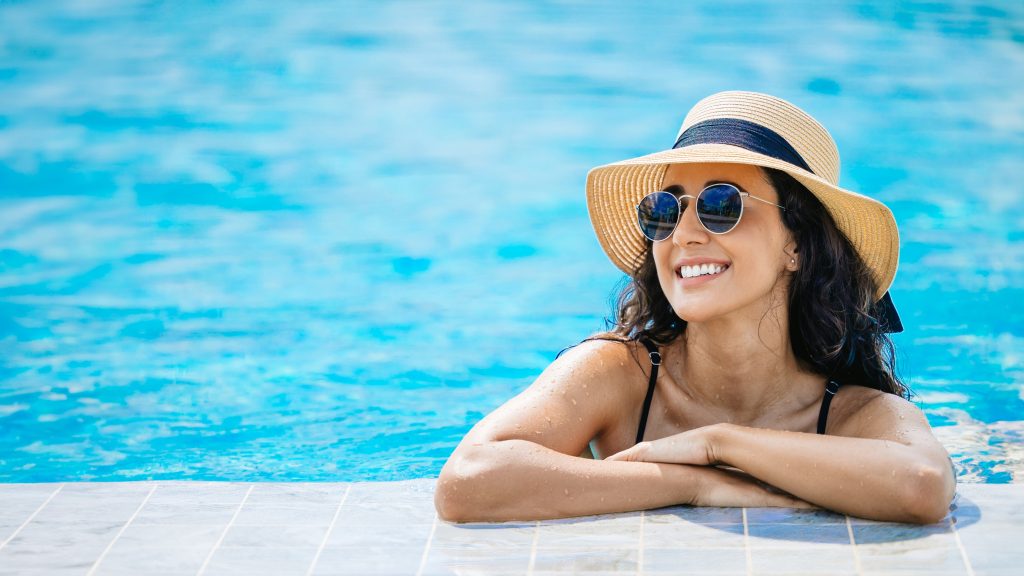
There are a few simple ways to reduce UV damage to hair. The most effective is physical protection such as a wide-brimmed hat that shields your scalp from sunburn and dramatically reduces UV exposure to the hair itself. For days when you’ll be in and out of the sun without a hat, look for leave-in conditioners, serums, or sprays that contain UV filters specifically formulated for hair. These are increasingly available and offer a meaningful layer of defense.
One additional note for those who color their hair: if you have a pool-heavy or beach-heavy vacation planned, hold off on coloring right beforehand. Freshly colored hair, particularly blonde, is significantly more vulnerable to UV and chlorine damage, and the combination can rapidly accelerate color fading and structural damage.
A Simple Summer Hair Care Routine
You don’t need a complicated routine to keep your hair healthy this summer. You need consistent habits and the right products. Here’s what we recommend:
- Before swimming, wet your hair with fresh water and apply a protective leave-in conditioner or oil.
- After swimming, rinse thoroughly with clean water as soon as you exit the pool or ocean. Don’t let chlorine or salt water sit. Shampoo with a gentle, moisturizing formula and follow with conditioner every time.
- Weekly, consider using a clarifying shampoo to remove chemical and product buildup from pool exposure, followed by a deep conditioning or hydrating hair mask to restore moisture balance.
- Daily, protect your scalp from the sun with a wide-brimmed hat or scalp SPF during prolonged outdoor exposure.
- Minimize heat styling. Your hair is already under thermal and environmental stress in the summer. Adding blow dryers and flat irons on top of that compounds the damage. Whenever possible, let hair air dry in the summer months.
- Trim regularly. Split ends are more common in summer due to UV and water exposure. A trim at the start of the season removes existing damage and prevents it from traveling up the hair shaft.
When to See a Dermatologist
Most hair and scalp issues that arise in the summer are manageable with the right at-home routine. But some situations warrant professional evaluation. Come see us if you notice:
- Persistent scalp itch that doesn’t resolve with dandruff shampoo after two to three weeks of consistent use
- Visible redness, sores, or significant flaking on the scalp
- A rash along the hairline or behind the ears that may signal contact dermatitis
- Unexpected or accelerated hair shedding that concerns you
- Any scalp symptoms that interfere with your comfort or quality of life
Your scalp deserves the same expert care and attention as the rest of you. Summer in Florida is worth enjoying to the fullest. With the right approach to hair and scalp care, you can do exactly that without paying for it in damage and discomfort. Our team is here to help.
Have questions about your hair or scalp? Schedule an appointment with our team today!
About Us
FLDSCC’s team of providers are experts in diagnosing and treating skin cancers; skin conditions and diseases such as eczema, rosacea, dry skin, rashes, and warts; and chronic skin diseases and infections, while simultaneously tackling aging skin, wound care, and a multitude of other skin, hair, and nail concerns.
Several FLDSCC providers are fellowship-trained in Mohs micrographic surgery, an effective state-of-the-art treatment for most types of skin cancers. Mohs surgery involves minimal discomfort and encourages the greatest preservation of healthy tissue, which means less risk of scarring and superior cosmetic results.
FLDSCC has many convenient locations throughout the state. For more information, visit www.fldscc.com, or call (855) FLD-SKIN.