When we think about sun protection, we usually picture areas of our bodies visible to the sun like our face, arms, and legs. But what about the skin hiding under your hair? For men, whether it’s on your scalp, face, or other areas of your body; and for women, on your scalp – hair does act as a built-in barrier against the sun, but only partially. Hair can offer some natural protection, but it’s nowhere near strong enough to fully block the sun’s harmful ultraviolet (UV) rays.
The Skin Cancer Foundation highlights that skin cancers can and do develop in areas covered by hair. These areas are often overlooked during sun protection routines and even self skin exams, making them vulnerable spots for sun damage and skin cancer.
Let’s break down what hair can do, what it can’t, and how both men and women can better protect these commonly missed areas.
How Much Protection Does Hair Really Provide?
Hair does serve a biological purpose. Thicker, denser hair can:
- Create partial shade
- Scatter and absorb some UV radiation
- Reduce the intensity of direct sun exposure
However, hair does not provide enough protection on its own. UV rays can easily pass between strands, especially if hair is:
- Fine or thin
- Light in color
- Short
- Styled in a way that exposes the scalp
You can think of hair as a loosely woven cover. It’s helpful, but not complete protection. The skin underneath is still vulnerable, and the only way to fully protect the hair is to use sun safety measures.
For Men: What’s Really Under Your Hair?
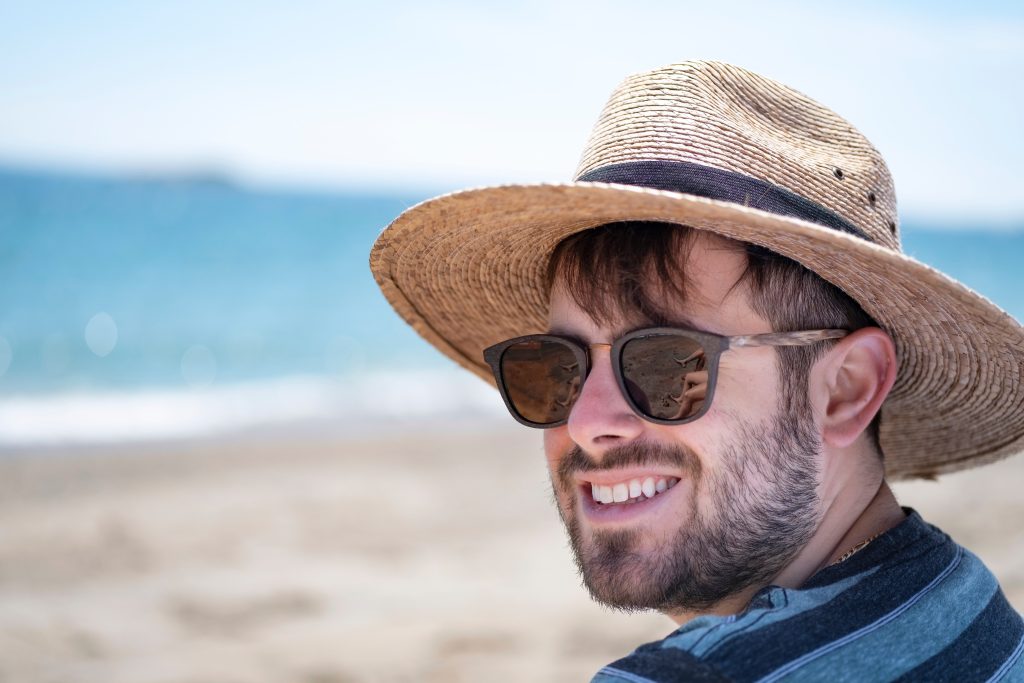
Facial Hair and Beards
Beards can absolutely reduce some UV exposure, but they don’t eliminate it. In fact, skin cancers under facial hair are sometimes diagnosed later simply because they’re harder to see.
Areas commonly missed include:
- The upper lip
- The chin
- Along the jawline
- The neck beneath a full beard
The challenge isn’t just UV exposure, it’s also visibility. If you’re not regularly examining the skin underneath, subtle changes can go unnoticed.
What Can Help:
- Applying a broad-spectrum SPF 30+ to the skin beneath facial hair (gently work this in)
- Using lightweight lotions or gel-based sunscreens help with easy absorption
- Having facial hair examined during annual skin checks
- Doing a monthly self-exam of your whole body, including areas with hair
Thinning Hair & Your Scalp
For men with thinning hair or shaved heads, the scalp becomes one of the highest-risk areas for sun damage. It’s exposed more directly and often receives prolonged sun throughout the day.
To protect your head, you should:
- Wear a wide-brimmed hat when outdoors
- Apply sunscreen (you can use sprays, sticks, or powders designed for the scalp) – don’t forget your forehead, ears, neck, and any bald spots
- Pay close attention to the hairline and crown when giving yourself a skin exam
Even if hair still covers most of your head, areas where the scalp shows through are susceptible to the sun’s powerful rays. Chest, arm, or leg hair might create a slight barrier, but it does not prevent sunburn or long-term UV damage. Sunscreen should still be applied directly to the skin, even in areas with hair.
For Women: Is Your Scalp Protected?
Women are just as vulnerable to sun damage on their scalp, too. It can be a frequently forgotten place to protect from UV rays. The part, where hair naturally separates, receives direct sun exposure often. Over time, repeated exposure in the same spot can increase risk of skin cancer.
This is especially important for women who have:
- Fine or thinning hair
- Light-colored hair
- A more defined part
- Hairstyles that expose the scalp (ex: tight ponytails, braids, and buns)
Even if your hair feels thick, UV rays can still penetrate down to the skin on your scalp.
Ways to protect the scalp:
- Apply SPF sprays or powders along the part
- Use sunscreen sticks along the hairline
- Change your part occasionally to vary exposure
- Wear hats with a wide brim during extended outdoor activities
The hairline, temples, and ears are also often missed and frequently exposed – don’t forget to apply sunscreen on these areas as well!
Why Protect Your Skin Under Hair?
Skin cancers that develop on the scalp or beneath facial hair can be:
- Harder to detect early
- Diagnosed at later stages
- More aggressive in certain cases
That’s why annual full-body skin examinations are so important. A dermatologic expert will carefully examine the scalp, part the hair to look at the skin underneath, and assess areas under facial hair and any other areas that are difficult to evaluate on your own.
Regular self-checks at home are also important and should be done monthly.
A Layered Approach to Protection
Although hair is a part of your body’s natural defense system, it should never be the only layer of your sun protection. As a reminder, engaging in a more complete sun protection strategy should include:
- Using a daily broad-spectrum sunscreen with SPF of 30 or higher
- Reapply sunscreen every two hours or directly after swimming or sweating
- Wearing hats and sun protective clothing with UPF 50+
- Steer clear of baseball hats, as they only cover about one-fourth of your head and leave areas such as your ears, chest, and neck exposed
- Including areas like your scalp and hairline, as well as any area that is covered in hair and exposed to the sun
- Giving yourself regular skin exams
- Making an appointment for an annual skin exam with a dermatologist
Whether it’s beneath a beard, under thinning hair, or along your part line, the skin underneath your hair still needs care and attention. Protecting these areas can make a big difference in long-term skin health and skin cancer prevention.
If it’s been a while since your last full-body skin exam, it’s a great time to schedule one. Early detection remains one of the most powerful tools we have in preventing and treating skin cancer.
For more information, or to schedule an appointment, call Florida Dermatology and Skin Cancer Centers at 855-353-7546 (855-FLD-SKIN).
About Us
FLDSCC’s team of providers are experts in diagnosing and treating skin cancers; skin conditions and diseases such as eczema, rosacea, dry skin, rashes, and warts; and chronic skin diseases and infections, while simultaneously tackling aging skin, wound care, and a multitude of other skin, hair, and nail concerns.
Several FLDSCC providers are fellowship-trained in Mohs micrographic surgery, an effective state-of-the-art treatment for most types of skin cancers. Mohs surgery involves minimal discomfort and encourages the greatest preservation of healthy tissue, which means less risk of scarring and superior cosmetic results.
FLDSCC has many convenient locations throughout the state. For more information, visit www.fldscc.com, or call (855) FLD-SKIN.